
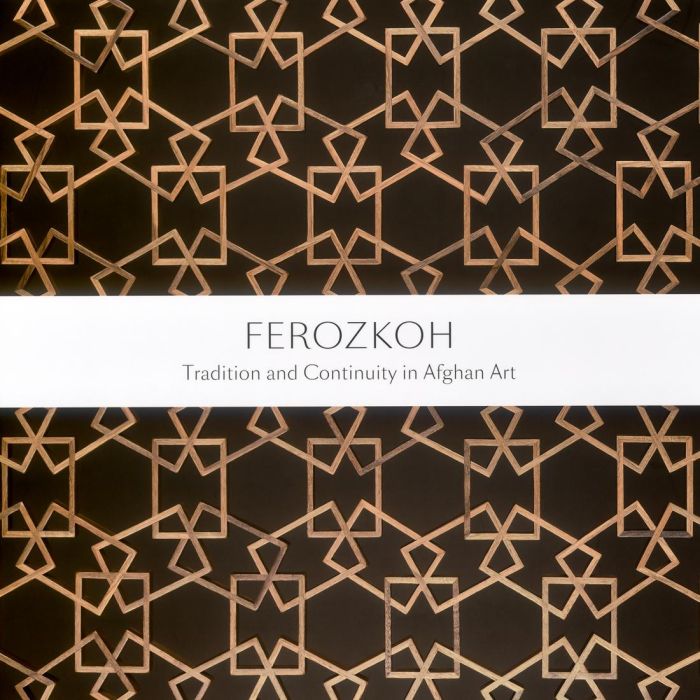
Ferozkoh Tradition and Continuity in Afghan Art - English version
QR 150.00
"Ferozkoh represents a partnership between the Museum of
Islamic Art (MIA) and the students and teachers of the Turquoise
Mountain Institute for Afghan Arts and Architecture in Kabul.
The unifying theme of the exhibition is the preservation of
the traditional arts of the Islamic world - in both themes and
materials - in the modern world, and the role of education in its
transmission and translation. Half of the objects featured in the
exhibition are historical objects from the Museum of Islamic Art
(MIA) collection, from four great dynasties with connections to
Afghanistan: the Ghaznavids, Timurids, Mughals and Safavids.
The other half of the exhibition presents works created
specifically for the exhibition by Turquoise Mountain students in
response to, and in conversation with, the historical objects."
- SKU
- CBOK000053
Description / Ferozkoh Tradition and Continuity in Afghan Art - English version
"Ferozkoh represents a partnership between the Museum of
Islamic Art (MIA) and the students and teachers of the Turquoise
Mountain Institute for Afghan Arts and Architecture in Kabul.
The unifying theme of the exhibition is the preservation of
the traditional arts of the Islamic world - in both themes and
materials - in the modern world, and the role of education in its
transmission and translation. Half of the objects featured in the
exhibition are historical objects from the Museum of Islamic Art
(MIA) collection, from four great dynasties with connections to
Afghanistan: the Ghaznavids, Timurids, Mughals and Safavids.
The other half of the exhibition presents works created
specifically for the exhibition by Turquoise Mountain students in
response to, and in conversation with, the historical objects."